
Aerial view of a city's waste management sewage and water treatment plants. Waste water purification.

Oregon Commission Approves Sale of Cline Butte and Mountain Lakes to California Water Service Group

On October 28, 2026, the Public Utility Commission of Oregon (OPUC) issued Order No. 26-401 approving California Water Service Group’s (Cal Water) acquisition of Oregon Water Utilities – Cline Butte and Oregon Water Utilities – Mountain Lakes from SouthWest Water Company. The OPUC found that the transaction satisfies the Commission’s public interest “no harm” standard for water utility transfers.

Cline Butte is a regulated water utility serving approximately 1,841 connections near Redmond, Oregon. Mountain Lakes serves approximately 886 connections in Running Y, Ridgewater, Southview, and Pinecrest. Cal Water will acquire the utilities through its acquisition of Northwest Utility Systems, Inc., their direct parent company. Following the transaction, Cline Butte and Mountain Lakes will remain separate legal entities and continue to own their existing utility property, easements, and water rights.

The Joint Application stated that customers will experience no interruption in service and no immediate change in existing water rates as a result of the transaction. The applicants also emphasized Cal Water’s financial resources and extensive experience operating regulated water utilities. Cal Water currently provides water and wastewater utility service in five states and serves approximately two million customers through approximately 550,000 service connections.

The Commission approved the transaction subject to conditions intended to preserve regulatory oversight and financial separation following the acquisition. Among other requirements, Cline Butte and Mountain Lakes must continue to maintain separate financial information and identifiable assets and liabilities, comply with affiliated-interest requirements, and obtain Commission approval before guaranteeing affiliate debt. The utilities must also file a general rate case by April 15, 2028.

As part of the transaction, Cline Butte and Mountain Lakes will convert from corporations to limited liability companies. The applicants requested approval of those conversions along with approval of the acquisition.

Sanger Greene, PC (Irion Sanger) represented Oregon Water Utilities – Cline Butte, Oregon Water Utilities – Mountain Lakes, and SouthWest Water Company in the proceeding.

img2

NIPPC Publishes Utility Practices Paper

On September 11, 2026, the Northwest & Intermountain Power Producers Coalition (NIPPC), the Independent Energy Producers Association (IEP), and the Solar Energy Industries Association (SEIA) published Supporting Competition in Utility Energy Procurement Processes: Shedding Light on Systemic Problems and Market Solutions in the West, which addresses the pervasive structural conflict of interest known as utility-ownership bias.  The paper explains that, under traditional cost-of-service regulation, an investor-owned utility’s (IOU) profits are tied directly to its rate base growth via capital expenditures.  Consequently, IOUs are heavily incentivized to build and own their own generation and storage infrastructure rather than purchasing power from Independent Power Producers (IPPs) via Power Purchase Agreements (PPAs), which are passed through to consumers without any profit markup in most states.  This systemic bias distorts wholesale energy procurement across eleven Western states, excluding California, frequently overcharging ratepayers and stifling market competition.

The paper categorizes anti-competitive utility behaviors into several systemic practices, starting with the avoidance of formal Requests for Proposals (RFPs) through one-off bilateral deals or mid-stream “urgent reliability” plan modifications.  When public RFPs are issued, utilities utilize significant informational advantages, such as failing to structurally separate their internal self-build bid teams from their RFP evaluation teams and leveraging proprietary third-party developer data.  Furthermore, solicitations are often engineered with structural deal-breaking provisions including rigid contract penalties, compressed commercial operation timelines that only pre-planned utility projects can meet, and the withholding of ratepayer-funded transmission rights from independent bidders.

During the bid evaluation phase, utilities routinely utilize uneven scoring metrics to favor their own projects.  They contrast their loose, adjustable cost-plus self-build estimates, which frequently suffer from post-procurement cost overruns borne by ratepayers, against strict, fixed-price IPP bids.  This preference is amplified through the manipulation of obfuscated portfolio models, the application of arbitrary imputed debt scoring penalties onto PPAs, and the use of speculative generic fill cost assumptions that artificially devalue shorter-term third-party contracts.  To counter these distortions, the paper outlines immediate regulatory remedies, such as empowering Independent Evaluators (IEs) accountable only to state commissions, standardizing transparent term normalization methods, and allowing IPPs to utilize shared ratepayer assets like surplus interconnection capacity.

The paper includes a comprehensive list breaking down the utility generation ownership percentages resulting from IOU RFPs in eleven Western states from the last 18 years and concludes by providing additional examples and specific citations to state laws and utility commission dockets that illustrate examples of utility practices detailed in the paper.

Sanger Greene (Irion Sanger and Ellie Hardwick) assisted the Northwest & Intermountain Power Producers Coalition in drafting the paper.

The Northwest & Intermountain Power Producers Coalition represents electricity market participants in the Pacific Northwest, including independent power producers, electricity service suppliers, and transmission companies.  NIPPC is committed to facilitating cost-effective electricity sales, offering consumers choices in their energy supply, and advancing fair, competitive power markets.

Max (3)

Oregon Commission Finds PacifiCorp’s Actions ‘Unreasonable’ in Interconnection Cost Dispute

On June 24, 2026, the Oregon Public Utility Commission (OPUC) issued an order in UM 2305 partially granting a complaint by Green Solar, LLC (Green Solar) against PacifiCorp regarding the cost to interconnect the small community solar project.  Specifically, in Order No. 26-217, the OPUC directed PacifiCorp to revise its final billing after finding several of the utility’s interconnection costs unreasonable.  Prior to the complaint, PacifiCorp attempted to charge Green Solar nearly double the initial estimates for the cost of interconnection.

The OPUC made four principle findings regarding unreasonable actions taken by PacifiCorp.  

First, the OPUC found that PacifiCorp failed to accurately identify existing utility infrastructure under its own substation, increasing undergrounding costs for communication infrastructure.

Second, the OPUC found PacifiCorp failed to properly coordinate internally in the handling of overlapping transmission upgrades.  PacifiCorp was aware that transmission poles needed to be replaced both for Green Solar’s interconnection and for a separate safety compliance project.  PacifiCorp proceeded with the safety compliance project without accounting for the known interconnection needs, resulting in duplicative replacement of utility poles within one year.

Third, the OPUC found PacifiCorp’s decision to charge Green Solar for faulty radio equipment unreasonable.  PacifiCorp had selected the vendor and purchased the radio equipment, but did not pursue a warranty remedy for the defective equipment. 

Fourth, the OPUC divided approximately $20,000 in overtime costs equally between Green Solar and PacifiCorp.  The OPUC found that both Green Solar and PacifiCorp contributed to delays in the project and that the resulting urgency at the end of the interconnection process was attributable to actions and inactions by both parties.

The order provides an important example of the OPUC’s approach to determining which costs are properly attributable to an interconnection customer and which costs must be borne by the utility.  The decision demonstrates that an interconnection customer may be responsible for reasonable costs exceeding an initial estimate, but that utilities may not be able to pass through all the costs resulting from their own errors, omissions, or failure to coordinate related system projects.  

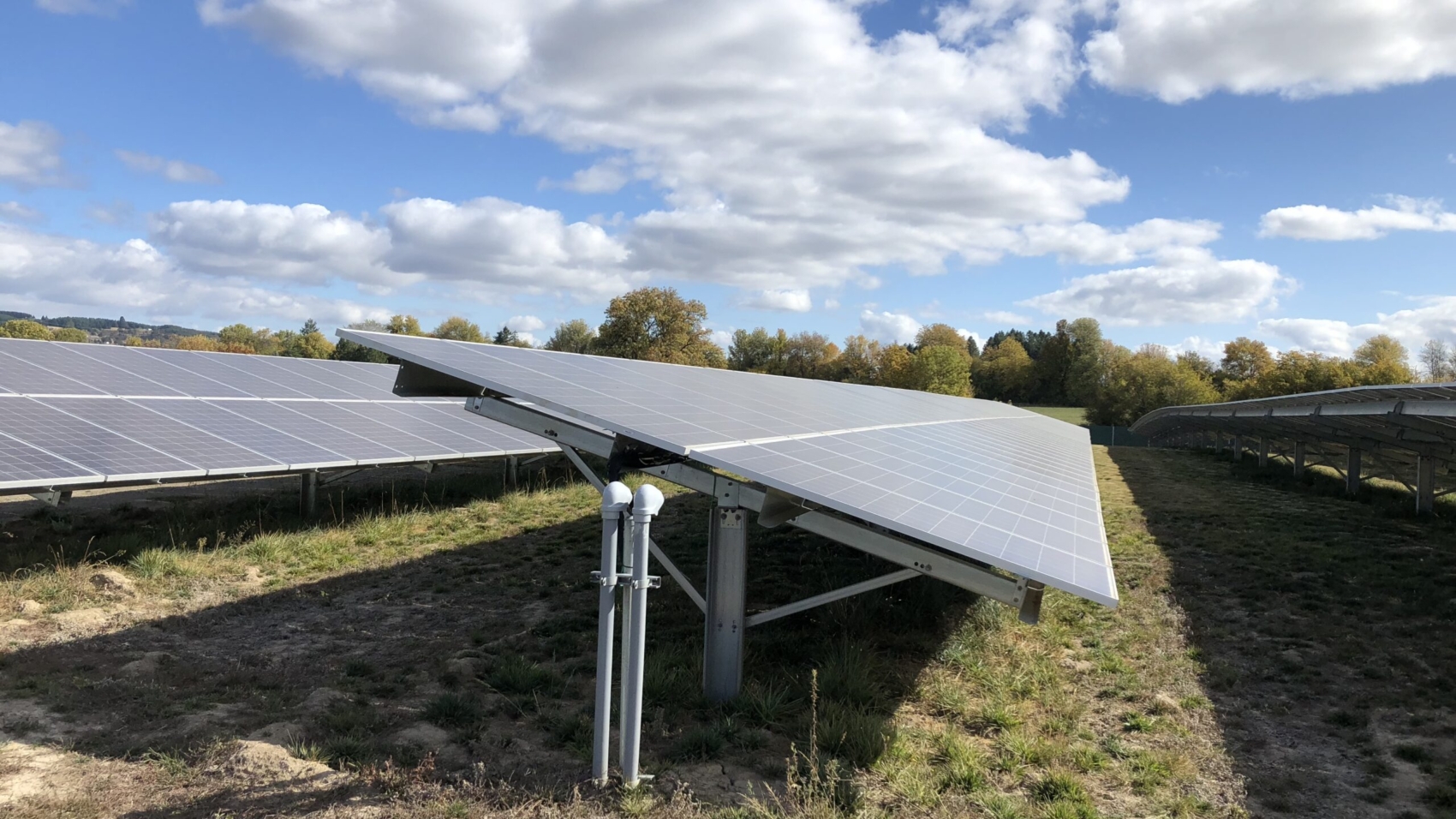
Sanger Greene PC (Irion Sanger and Diego Rivas) represented Green Solar in the proceedings. Green Solar is a 2.875 MW community solar project near Culver, Oregon.

Solar panels with electricity pylon and sunset. Clean power energy concept

Oregon Commission Adopts Revisions to PGE Large Load Tariffs

On May 7, 2026, the Oregon Public Utility Commission (Oregon Commission or OPUC) adopted, with modifications, the partial stipulation for Portland General Electric Company’s (PGE) tariff provisions applicable to large loads.  The order addressed cost allocation and tariff design for serving large electricity loads within PGE’s service territory, including revisions to existing tariff Schedules 89 and 90.  Driven by the passage of House Bill (HB) 3546 (the POWER Act), this investigation’s primary focus was the creation of Schedule 96, a separate and distinct customer class specifically for large data centers utilizing 20 megawatts (MW) or more of capacity.  The order aims to prevent unwarranted cost-shifting from data center loads onto residential and small commercial ratepayers while supporting continued progress toward the clean energy mandates outlined in HB 2021.

To achieve these protections, the Commission approved a strict suite of contractual and structural mechanisms for Schedule 96 and other large industrial tariffs.  Key provisions include a minimum transmission and generation demand charge set at 90 percent of contracted capacity, flat distribution charges covering 100 percent of expansion costs, and a 1-cent per kilowatt-hour surcharge for customers with an allocated capacity of 100 MW or greater.  The revenue from this surcharge is earmarked to fund non-cost-effective energy efficiency upgrades and home repairs for vulnerable, energy-burdened customers.  Additionally, the order establishes a minimum contract term of 10 years that scales upward based on the size of the load (up to a maximum of 30 years), alongside early exit fees and exceedance penalties to guard against stranded asset risks.

Through this order the Commission also adopted a landmark interconnection queue for Schedule 96 customers to manage the grid impacts of rapid load growth.  Under this framework, data centers cannot be energized until a reliable plan of service is established that matches non-emitting capacity to the load without hindering PGE’s compliance with HB 2021 greenhouse gas reduction goals.  Customers can navigate the queue and accelerate connection by leveraging load flexibility, onsite generation, or direct access arrangements, or utilizing Commission-approved special contracts for dedicated renewable resources.

The order also adopts a First Partial Stipulation, which resolved several non-contested procedural and study parameters among participating stakeholders.  These include lowering the Large Load Customer Agreement threshold to 20 MW and implementing updates to PGE’s distribution marginal cost study to separate substation costs by class.  PGE is ordered to implement these changes through a compliance filing, integrating the updated cost-allocation principles to provide immediate rate relief to residential and small commercial customer groups.

This order was later modified by Order No. 26-309, granting reconsideration in part, and both orders are currently under appeal before the Oregon Court of Appeals.

Sanger Greene (Irion Sanger and Max Greene) represented the Northwest & Intermountain Power Producers Coalition in the OPUC docket. The Northwest & Intermountain Power Producers Coalition represents electricity market participants in the Pacific Northwest, including independent power producers, electricity service suppliers, and transmission companies.  NIPPC is committed to facilitating cost-effective electricity sales, offering consumers choices in their energy supply, and advancing fair, competitive power markets.