
Max (3)

Oregon Commission Adopts Rules on Small-Scale Renewable Resources

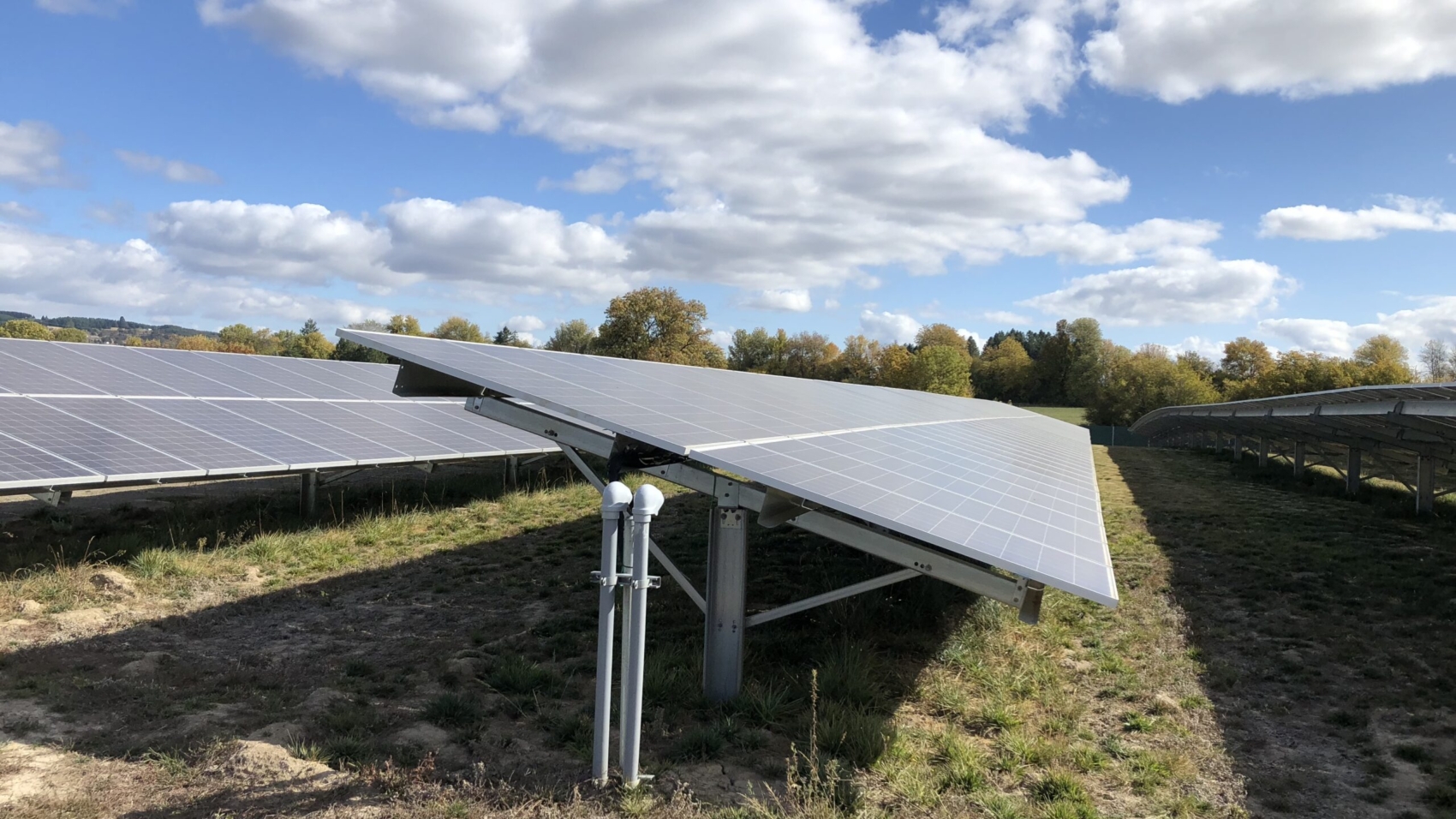
On May 26, 2026, the Oregon Public Utility Commission (Oregon Commission or OPUC) adopted rules related to the small-scale renewable (SSR) requirement at OAR 860-091.  This rulemaking originated with a petition for declaratory ruling by PacifiCorp on various SSR issues in Docket No. 58.  The Commission denied the petition but opened a rulemaking instead.  Many stakeholders, including the Renewable Energy Coalition, Community Renewable Energy Association, Oregon Solar + Storage Industries Association, Portland General Electric Company, PacifiCorp, and Alliance for Western Energy Consumers, advocated for changes to the SSR rules throughout the rulemaking.  The Commission issued Order No. 26-192 on May 27, 2026, adopting Staff’s recommendations.

The revised rules make a series of changes.  First, the baseline calculation of Aggregate Electrical Capacity (the denominator used to calculate the utility’s SSR obligation) was revised to include all of the utility’s generation resources, whether utility owned or through a contract, to serve Oregon load.  However, storage resources, SSR resources, and behind-the-meter resources are excluded from the calculation of Aggregate Electrical Capacity.  Second, the rules clarified that a utility’s compliance standard is calculated annually and 12 months prior to the due date for the compliance report.  Third, the rules clarified what resources are SSR-eligible, including resources eligible for Oregon’s Renewable Portfolio Standard, Community Solar Program projects, and front-of-meter resources incorporated into a microgrid or other resilience project.  Fourth, the rules clarified what resources are SSR-ineligible, including behind-the-meter resources and energy storage systems.

Sanger Greene (Irion Sanger and Ellie Hardwick) represented the Renewable Energy Coalition in the proceedings.  The Renewable Energy Coalition is an organization whose members include irrigation districts, water districts, corporations, small utilities, and individuals who own and operate nearly fifty qualifying facilities – small renewable energy generators that operate under the federal Public Utility Regulatory Policies Act.  The Coalition advocates to ensure that small renewable generation projects continue to make an important contribution to the Northwest’s energy future.


Dark silhouette of high voltage towers with electric power lines at sunrise.

OPUC Updates Oregon’s Direct Access Program

On May 7, 2026, the Oregon Public Utility Commission (the Oregon Commission or OPUC) issued Order No. 26-153 in Docket No. UM 2024 updating Oregon’s direct access program and ordered compliance filings.

In the Order, the Oregon Commission addressed numerous components of direct access including transition adjustments, non-bypassable costs, election windows, program caps, eligibility, aggregation limits, resource adequacy, preferential curtailment, return to cost-of-service, default supply, and more.

Key parties included the Northwest & Intermountain Power Producers Coalition (NIPPC), Calpine Energy Solutions, LLC, Alliance for Western Energy Consumers, Commission Staff, Portland General Electric Company (PGE), PacifiCorp, Citizens’ Utility Board, and NewSun Energy. Stakeholders submitted several rounds of informal comments, straw proposals, three rounds of testimony, and two briefs.

Highlights of the Order include:

  • Set transition adjustment charges that will be charged for five years and updated annually.
  • Declined to set a floor or ceiling for the transition adjustment charges.
  • Eliminated PacifiCorp’s consumer opt-out charge and declined to let PGE create one similar to PacifiCorp’s.
  • Confirmed direct access customers must pay for non-bypassable charges but held individual non-bypassable charges will be dealt with in general rate cases or individual tariff proceedings.
  • Set the election window at one month for direct access program selection.
  • Kept caps in place but allowed the caps to be waived if certain criteria are met.
  • Allowed direct access customers to shift between direct access programs.
  • Allowed the utilities to maintain different aggregation minimums for direct access load.
  • Adopted a capacity backstop charge for direct access customers to pay to the utility for resource adequacy until October 1, 2029.
  • For preferential curtailment:
    • Set the size threshold of direct access load to be eligible at 10 MW;
    • Allowed critical facilities to participate;
    • Set schedule of 60 days for the utility to provide cost estimate for upgrades needed to be preferentially curtailable, 60 days for the direct access customer to execute the agreement, and one year for the utility to install the upgrades;
    • Allowed a direct access customer to switch between curtailable and non-curtailable service during the election window each year if space is available;
    • Allowed customers to designate a portion of their load as curtailable and a portion as non-curtailable; and
    • Adopted Staff’s list of potentially curtailable events.
  • Regarding default supply:
    • Allowed the utilities to have different return-to-service periods;
    • Required direct access customers on standard offer default supply to pay 125 percent of either Mid-C or EIM actual prices plus a demand charge or direct access customers who give notice to return to cost-of-service will only pay 100 percent of either Mid-C or EIM prices plus the demand charge; and
    • Adopted a one-time administrative charge of $5,000.
  • Gave direct access customers a year to opt out of direct access service or to rescind a notice provided during the calendar year prior to the order.
  • Required the utilities to file a report by 12 months after the final order detailing the number of direct access customers returning to cost-of-service, each customer’s demand in aMW, and each customer’s monthly generation in MWh over the previous year.

The utilities filed compliance filings by July 7, 2026.  NIPPC, AWEC, PacifiCorp, and NewSun Energy also filed Applications for Reconsideration.   

Sanger Greene (Irion Sanger, Max Greene, and Ellie Hardwick) represented the Northwest & Intermountain Power Producers Coalition. The Northwest & Intermountain Power Producers Coalition represents electricity market participants in the Pacific Northwest, including independent power producers, electricity service suppliers, and transmission companies.  NIPPC is committed to facilitating cost-effective electricity sales, offering consumers choices in their energy supply, and advancing fair, competitive power markets.

WPSC Updates Avoided Costs in Wyoming

On April 30, 2026, the Wyoming Public Service Commission (WPSC) approved Rocky Mountain Power’s application to update its avoided cost methodology for qualifying facilities (QF) under Schedules 37 and 38. The WPSC adopted most of the Company’s proposal after the utility made significant changes based on testimony presented by the Renewable Energy Coalition (REC).  The order in Docket No. 20000-687-ET-25 updates both the company’s standard and non-standard avoided cost tariffs.  

Rocky Mountain Power, a subsidiary of PacifiCorp, request included two major changes.  First, Rocky Mountain Power requested and received approval to use the locational marginal price (LMP) from Western Energy Imbalance Market (WEIM) nodal information for non-firm energy purchases.  This issue was uncontested and follows the Federal Energy Regulatory Commission’s Order No. 872 in 2020, which allows utilities to use LMPs where appropriate.

Second, the WPSC approved revisions to Rocky Mountain Power’s Partial Displacement Differential Revenue Requirement (PDDRR) methodology for long-term avoided cost rates.  The revised methodology incorporates updated proxy resource assumptions and allows for a temporary use of third-party ownership of proxy resources because Rocky Mountain Power is not considering ownership of new generating assets in the short term. 

The updated avoided costs resulting from  the PDDRR methodology were substantially influenced by the involvement of REC in the proceeding.  First, REC proposed, and Rocky Mountain Power accepted, that wind and solar QFs be allowed to defer energy storage resources if wind and solar proxy resources were not included in the PDDRR inputs.  Previously, wind and solar resources could only defer other wind and solar resources, respectively.  Second, Rocky Mountain adjusted the allocation of the incremental cost of a displaced battery resource from 33 percent to 58 percent in the summer months for baseload QFs (hydro), consistent with the mix of summer and winter reliability events in the 2025 Integrated Resource Plan (IRP).  Third, Rocky Mountain Power adjusted avoided cost rates based on changes to federal tax policy.

REC also advocated for Rocky Mountain Power to apply the entirety of fixed capacity costs of avoided proxy resources in the summer months for baseload resources to reflect the need for capacity resources in the summer months.  Additionally, REC advocated that Rocky Mountain Power use the costs of a simple cycle combustion turbine as the proxy resource in years when a QF displaces Western Resource Adequacy Program (WRAP)-compliant market purchases.  The Commission ultimately rejected these proposals.

The new avoided cost rates became effective April 30, 2026. Sanger Greene PC (Irion Sanger and Diego Rivas) represented and assisted REC in the proceeding.