
Max (3)

Oregon Commission Finds PacifiCorp’s Actions ‘Unreasonable’ in Interconnection Cost Dispute

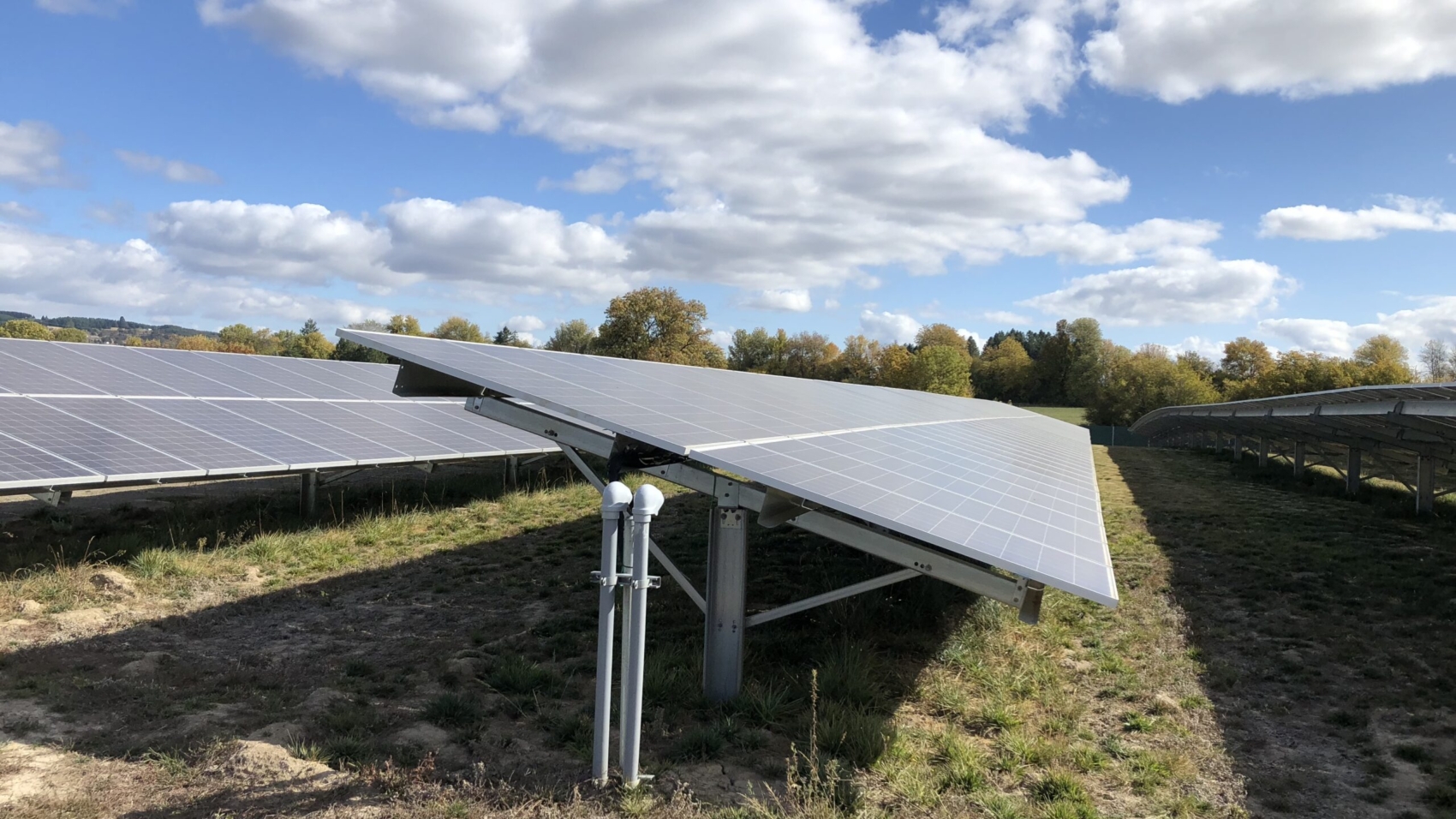
On June 24, 2026, the Oregon Public Utility Commission (OPUC) issued an order in UM 2305 partially granting a complaint by Green Solar, LLC (Green Solar) against PacifiCorp regarding the cost to interconnect the small community solar project.  Specifically, in Order No. 26-217, the OPUC directed PacifiCorp to revise its final billing after finding several of the utility’s interconnection costs unreasonable.  Prior to the complaint, PacifiCorp attempted to charge Green Solar nearly double the initial estimates for the cost of interconnection.

The OPUC made four principle findings regarding unreasonable actions taken by PacifiCorp.  

First, the OPUC found that PacifiCorp failed to accurately identify existing utility infrastructure under its own substation, increasing undergrounding costs for communication infrastructure.

Second, the OPUC found PacifiCorp failed to properly coordinate internally in the handling of overlapping transmission upgrades.  PacifiCorp was aware that transmission poles needed to be replaced both for Green Solar’s interconnection and for a separate safety compliance project.  PacifiCorp proceeded with the safety compliance project without accounting for the known interconnection needs, resulting in duplicative replacement of utility poles within one year.

Third, the OPUC found PacifiCorp’s decision to charge Green Solar for faulty radio equipment unreasonable.  PacifiCorp had selected the vendor and purchased the radio equipment, but did not pursue a warranty remedy for the defective equipment. 

Fourth, the OPUC divided approximately $20,000 in overtime costs equally between Green Solar and PacifiCorp.  The OPUC found that both Green Solar and PacifiCorp contributed to delays in the project and that the resulting urgency at the end of the interconnection process was attributable to actions and inactions by both parties.

The order provides an important example of the OPUC’s approach to determining which costs are properly attributable to an interconnection customer and which costs must be borne by the utility.  The decision demonstrates that an interconnection customer may be responsible for reasonable costs exceeding an initial estimate, but that utilities may not be able to pass through all the costs resulting from their own errors, omissions, or failure to coordinate related system projects.  

Sanger Greene PC (Irion Sanger and Diego Rivas) represented Green Solar in the proceedings. Green Solar is a 2.875 MW community solar project near Culver, Oregon.

Oregon Capitol Building in dusk viewing from the city park in tree blooming season

Oregon Commission Adopts Rules on Alternative Dispute Resolution and Mediation

On June 23, 2026, the Oregon Public Utility Commission (Oregon Commission or OPUC) adopted rules related to alternative dispute resolution (ADR) and mediation.  Many stakeholders, including the Renewable Energy Coalition, Community Renewable Energy Association, Oregon Solar + Storage Industries Association, NW Natural, Portland General Electric Company, and NewSun Energy, advocated for changes to the ADR and mediation rules throughout the rulemaking.  The Commission issued Order No. 26-216 on June 24, 2026 adopting Staff’s recommendations.

The revised rules make a series of changes.  First, the rules provide separate ADR and mediation processes for informal dispute resolution and eliminate the option of informal dispute resolution for declaratory rulings.  ADR applies to non-consumer complaints and mediation applies to consumer complaints.  The ADR rules are intended to promote voluntary settlement and reduce litigation.  Second, the ADR rules were amended to require both parties to jointly request ADR.  Third, the rules clarified that a request for ADR can be filed any time and does not have to be concurrent or after a complaint is filed with the Commission.  Thus, parties could file for ADR before a complaint is filed to try and avoid the need for the complaint.  Fourth, the rules established an expedited but flexible process for ADR with requirements for filing information, limitations on who can attend meetings, and timelines for meetings and decisions.  Fifth, the rules ensure all communications in ADR are confidential and will only be used for settlement.  Sixth, the rules establish that an administrative law judge presiding over ADR cannot preside over any related complaint or communicate with Commission Staff on the issue.  Finally, the rules allow the ADR facilitator to provide an independent assessment of issues and outcomes of the case if requested by a party. 

Sanger Greene (Irion Sanger and Ellie Hardwick) represented the Renewable Energy Coalition in the proceedings.  The Renewable Energy Coalition is an organization whose members include irrigation districts, water districts, corporations, small utilities, and individuals who own and operate nearly fifty qualifying facilities – small renewable energy generators that operate under the federal Public Utility Regulatory Policies Act.  The Coalition advocates to ensure that small renewable generation projects continue to make an important contribution to the Northwest’s energy future.

The main entrance to the granite and copper state capitol building in Helena, Montana, USA

Montana PSC Adopts Rules Implementing HB 55, Requiring an IE for Resource Procurements

On June 19, 2026, the Montana Public Service Commission (MPSC) adopted rules related to the procurement of resources by regulated electric utilities in Montana.  The rulemaking in Docket No. 2025.08.058 implemented House Bill 55 (HB 55) from the 2025 legislative session and amended the Administrative Rules of Montana (ARM) 38.5.2020 through 38.5.2025 pertaining to utility least cost planning and competitive solicitations, and implemented three new rules (ARM 38.5.2026 through 38.5.2028) pertaining to an independent evaluator for the competitive solicitation process.

HB 55 developed out of the Select Committee on Energy Resource Planning and Acquisition (SCERPA) during the 2023-2024 interim legislative session and builds upon the competitive procurement requirements from House Bill 597 (2019).  The subsequent rulemaking, which was required to be completed by July 1, 2026, and made several updates to the rules.  First, as required in HB 55, the new rules require the use of an independent evaluator to provide feedback to the MPSC on the draft request for proposal (RFP) and scoring of bids in response to the final RFP.  Second, the rules require the use of a third-party administrator when a utility owned resource is a possible outcome of the competitive solicitation.  Third, the rules establish the mechanism for the selection of the independent evaluator, the independent evaluator’s scope of work, and the utility’s obligations in working with the independent evaluator.  The MPSC will maintain a list of qualified independent evaluators, and require the selection of the independent evaluator within 30 days after the utility files its intent to issue a competitive solicitation.  The utility’s notice of intent to issue a competitive solicitation must occur no less than 90 days prior to the release of the final RFP. 

Sanger Greene (Irion Sanger and Diego Rivas) represented the Northwest & Intermountain Power Producers Coalition (NIPPC) through the rulemaking process.  NIPPC represents electricity market participants in the Pacific Northwest, including independent power producers, electricity service suppliers, and transmission companies.  NIPPC is committed to facilitating cost-effective electricity sales, offering consumers choices in their energy supply, and advancing fair, competitive power markets.