
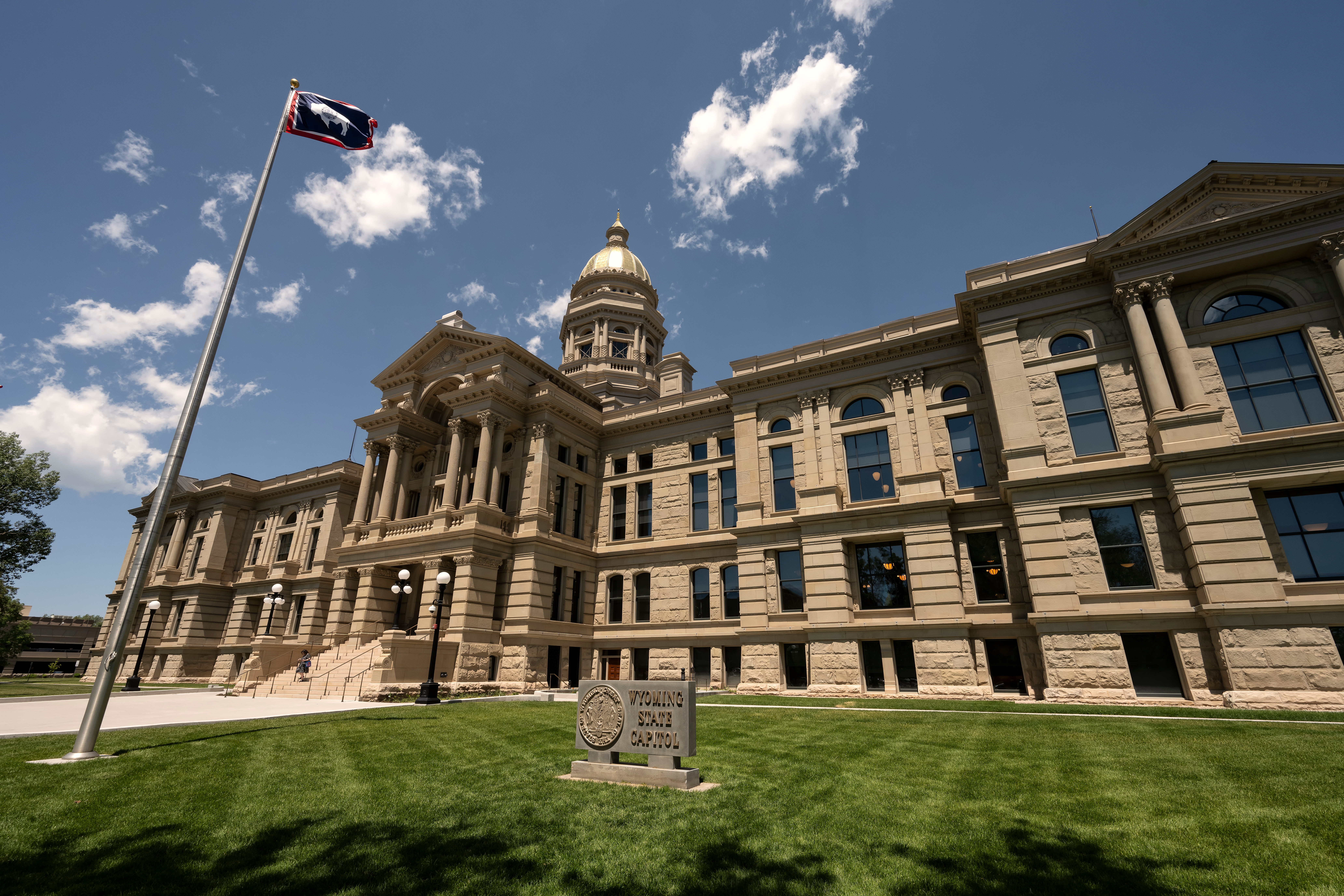
WPSC Updates Avoided Costs in Wyoming

On April 30, 2026, the Wyoming Public Service Commission (WPSC) approved Rocky Mountain Power’s application to update its avoided cost methodology for qualifying facilities (QF) under Schedules 37 and 38. The WPSC adopted most of the Company’s proposal after the utility made significant changes based on testimony presented by the Renewable Energy Coalition (REC).  The order in Docket No. 20000-687-ET-25 updates both the company’s standard and non-standard avoided cost tariffs.  

Rocky Mountain Power, a subsidiary of PacifiCorp, request included two major changes.  First, Rocky Mountain Power requested and received approval to use the locational marginal price (LMP) from Western Energy Imbalance Market (WEIM) nodal information for non-firm energy purchases.  This issue was uncontested and follows the Federal Energy Regulatory Commission’s Order No. 872 in 2020, which allows utilities to use LMPs where appropriate.

Second, the WPSC approved revisions to Rocky Mountain Power’s Partial Displacement Differential Revenue Requirement (PDDRR) methodology for long-term avoided cost rates.  The revised methodology incorporates updated proxy resource assumptions and allows for a temporary use of third-party ownership of proxy resources because Rocky Mountain Power is not considering ownership of new generating assets in the short term. 

The updated avoided costs resulting from  the PDDRR methodology were substantially influenced by the involvement of REC in the proceeding.  First, REC proposed, and Rocky Mountain Power accepted, that wind and solar QFs be allowed to defer energy storage resources if wind and solar proxy resources were not included in the PDDRR inputs.  Previously, wind and solar resources could only defer other wind and solar resources, respectively.  Second, Rocky Mountain adjusted the allocation of the incremental cost of a displaced battery resource from 33 percent to 58 percent in the summer months for baseload QFs (hydro), consistent with the mix of summer and winter reliability events in the 2025 Integrated Resource Plan (IRP).  Third, Rocky Mountain Power adjusted avoided cost rates based on changes to federal tax policy.

REC also advocated for Rocky Mountain Power to apply the entirety of fixed capacity costs of avoided proxy resources in the summer months for baseload resources to reflect the need for capacity resources in the summer months.  Additionally, REC advocated that Rocky Mountain Power use the costs of a simple cycle combustion turbine as the proxy resource in years when a QF displaces Western Resource Adequacy Program (WRAP)-compliant market purchases.  The Commission ultimately rejected these proposals.

The new avoided cost rates became effective April 30, 2026. Sanger Greene PC (Irion Sanger and Diego Rivas) represented and assisted REC in the proceeding.

AdobeStock_2008133914

Oregon Commission Adopts Temporary Rules on Interconnection in Accordance with Executive Orders

On March 31, 2026, the Oregon Public Utility Commission (Commission) adopted temporary rules related to small generator interconnection in response to Oregon Executive Orders (EO) 25-25 and 25-29. Many stakeholders, including the Renewable Energy Coalition, Oregon Solar + Storage Industries Association, Interstate Renewable Energy Council, Portland General Electric Company, and PacifiCorp, advocated for changes to Commission Staff’s proposed temporary small generator interconnection rules. The Commission issued Order No. 26-108 on April 1, 2026 adopting Staff’s recommendations. 

Oregon Commission Updates PURPA Procedures for IOUs

On January 23, 2026, the Oregon Public Utility Commission (the Oregon Commission) issued Order No. 26-021 in Docket UM 2000, concluding Phase II of the Commission’s Investigation into PURPA Implementation.

In the Order, the Oregon Commission addressed numerous components of the methodology for establishing avoided cost prices, and established Phase III of the Investigation to address a pricing update mechanism, standardized avoided cost workbooks across utilities, and details regarding renewal notices.  

Key parties included the Renewable Energy Coalition, Northwest & Intermountain Power Producers Coalition, the Oregon Solar + Storage Industries Association, the Community Renewable Energy Association (QF Trade Groups), PacifiCorp, Portland General Electric Company, Idaho Power and the Oregon Commission Staff.

Highlights of the Phase II Order include:

  • Approval of an RPS Adder, Small-Scale Renewable Adder, and Deliverability Adder. Supported by QF Trade Groups. 
  • The Commission did not approve the Community Benefits Adder, Distribution Deferral Credit Adder, WRAP ELCC Adder, or Wildfire Mitigation Adder that were supported by the QF Trade Groups.
  • Elimination of separate price streams for Renewable Portfolio Standard (RPS) compliant and non-RPS compliant resources.  One singular price stream for all Qualifying Facilities (QFs) with the provision of renewable energy credits (RECs) to utilities based on the attributes of the deferred resource.  Supported by QF Trade Groups.
  • Standard avoided cost prices available to all QFs 10 MW in size and under, including solar and solar + storage QF previously capped at 3 MW.  Supported by QF Trade Groups.
  • Standard pricing term in PPAs to remain capped at 15 years fixed price plus 5 years variable market price.  Opposed by QF Trade Groups in favor of a 20-year fixed price term.
  • Use of a last-in, tuned Electric Load Carrying Capability (ELCC) methodology for determining capacity contribution.  Opposed by QF Trade Groups in favor of a first-in or first-in, tuned ELCC.
  • Use of the least-cost capacity resource acquired in the utility’s most recent RFP determination of avoided capacity costs.  Opposed by QF Trade Groups in favor of using third-party data.
  • Five-year in ramp period for PGE and PacifiCorp, and five years for Idaho Power, beginning at scheduled commercial operations, for new QFs to receive capacity payments.  QF Trade Groups recommended ramp-in begin at contract execution.  
  • Ability of renewing QFs to receive full capacity payments.  Supported by QF Trade Groups.
  • Binding one year notice for renewing QFs to receive capacity payments.  Opposed by QF Trade Groups.
  • Six by six pricing schedule replacing the heavy load hour and light load hour framework. QF Trade Groups opposed the utility-proposed 12 X 24 framework.
  • Assumption of a 75 percent QF success rate.  Supported by QF Trade Groups.

Phase III of the investigation is being conducted in Dockets AR 684 (PURPA Standard Avoided Costs, Price Adjustment Mechanism) and UM 2346 (PURPA Avoided Costs Standardized Workbooks).

Sanger Greene (Irion Sanger, Ellie Hardwick, and Diego Rivas) represented the Renewable Energy Coalition, Northwest & Intermountain Power Producers Coalition, and the Oregon Solar + Storage Industries Association, and Alyssa Forest also represented the Oregon Solar + Storage Industries Association.

The Renewable Energy Coalition is an organization whose members include irrigation districts, water districts, corporations, small utilities, and individuals who own and operate nearly fifty qualifying facilities – small renewable energy generators that operate under the federal Public Utility Regulatory Policies Act. The Coalition advocates to ensure that small renewable generation projects continue to make an important contribution to the Northwest’s energy future.

The Northwest & Intermountain Power Producers Coalition represents electricity market participants in the Pacific Northwest, including independent power producers, electricity service suppliers, and transmission companies.  NIPPC is committed to facilitating cost-effective electricity sales, offering consumers choices in their energy supply, and advancing fair, competitive power markets. The Oregon Solar + Storage Industries Association advocates for clean, renewable, solar technologies. OSSIA members include businesses, non-profit groups, and other solar industry stakeholders.

The DC Circuit Court of Appeals Upheld the FERC’s Grant of QF Status to Broadview Solar’s Solar-Plus-Storage Facility

On February 14, 2023, the United States Court of Appeals for the DC Circuit affirmed the Federal Energy Regulatory Commission’s (FERC) grant of qualifying facility (QF) status to Broadview Solar. The Court upheld FERC’s decision that a 160 MW solar-plus-storage project is a QF under the Public Utility Regulatory Policies Act (PURPA). 

Oregon Court of Appeals Affirms Oregon Public Utility Commission Order Regarding PGE’s PURPA Fixed Price Term and Oregon Public Utility Commission Jurisdiction

On January 5, 2023, the Oregon Court of Appeals affirmed an appeal of the Oregon Public Utility Commission’s (Commission) order in Docket No. UM 1931 regarding Commission jurisdiction over executed Public Utility Regulatory Policies Act (PURPA) contracts and the start of Portland General Electric Company’s (PGE) fixed-price term under then-existing standard power purchase agreements (PPA). The Court’s decision held that the 15-year fixed-price period under PGE’s then-existing PURPA PPAs began at contract execution not commercial operation date and that the Commission has jurisdiction over executed contracts between qualifying facilities (QFs) and the utilities. 

Washington Commission Adopted Settlement that Increases Avista’s Avoided Costs

At the December 22, 2022 Open Meeting, the Washington Utilities and Transportation Commission (the Commission) approved Avista’s avoided cost Schedule 62 tariff filing for small qualifying facilities in Docket No. UE-220783. The new tariff was the result of an informal settlement between Avista, Commission Staff, the Northwest & Intermountain Power Producers Coalition (NIPPC), and the Renewable Energy Coalition (REC).